
I arrived in Estes Park an hour later than I wanted to; primarily due to my flight departing late due to the Atlanta weather issue.
As I drove into this mountain town it was getting dark and I just needed to get something to eat. Luckily, the hotel restaurant had a cool burger restaurant / ale bar.
I tried to orient myself to this place. I’ve been here a handful of times but it all seems so new and was just discombobulated. Nothing seems familiar, which was funny because I used to be the girl who always wanted to see something new but I purposely have been going back to the places I’ve lived or spent time. It was a bit familiar but still seemed new.
I ate a burger and drank an IPA. I took a short walk down the road and saw a sliver of the moon before heading back and going to bed. Tomorrow was a big day.

In my typical fashion, I was wigged out and not sure what I would do. As I packed for the hike I thought maybe I’d just stay in this cute town and walk around instead of doing my hike tomorrow. I think about forgoing the 5am admission to Bear Lake in Rocky Mountain National Park I reserved when they first were available online months ago.
In the morning I was still uncertain what to do. I brushed my teeth. I looked around the hotel room and something in my brain clicks. I put on my trail runners, put in my contacts, filled my bladders with ice and water, and headed to my car ready to hike. I’m ready for this hike. I felt good.
As I drove into the park I thought how I would love to live here again. It just felt right. I knew Tennessee is not my forever place and maybe Colorado was. I missed my dogs and don’t like being without them but they are not allowed on trails in this national park.
I came here to hike Hallett Peak because I wanted to go back and do what I did when I took the American Youth Hostel trip in 1988. I was 17 and wanted to see the world.
Now, I want to go back to these places I visited in 1988 and while doing it – think about all the choices I made from that trip to now. This is the second time I’ve done this; last year I went to Glacier National Park. Next year is Yellowstone and Grand Teton.
Here I am, 37 years later. I’m hiking Flattop Mountain Trail and will continue .6 miles on an unnamed trail to Hallett Peak.
Here is the entry from my journal from 1988 (I’ve kept a journal since 1984)

Today, June 27, 2025, Friday, I entered the park and showed my timed entry to the park ranger. I was nervous about getting a parking spot at Bear Lake but when arriving at 6am the lot was half full – relief. I was feeling inspired and ready to hike.

I started up the trail to Flattop Mountain and most people I saw turned left to the shorter hikes to the lakes while carrying big cameras and lenses. I don’t see anyone until I see a family of 5 hiking towards me. They told me they weren’t prepared for the terrain and heading back to Bear Lake. I don’t see anyone again until I made a turn on the trail and saw colorful clothes to my left. A family of 3 was sitting on a rock taking in the views. I asked them if they are heading to Flattop and they said yes. Awesome, I reply. I won’t be alone.

I hiked the slowest I’ve ever hiked. My heart beat hard and I stopped frequently to catch my breath. I’m a fast hiker, but not today. I thought of turning around many times, but my self-talk told me “I have nothing else to do today so I might as well keep going.” This helps.
I seriously have no other commitments and could take as long as I needed to get to the top. This kept me going, plus, I really wanted to get to the top and re-live this memory. Nothing looked familiar. Nothing.
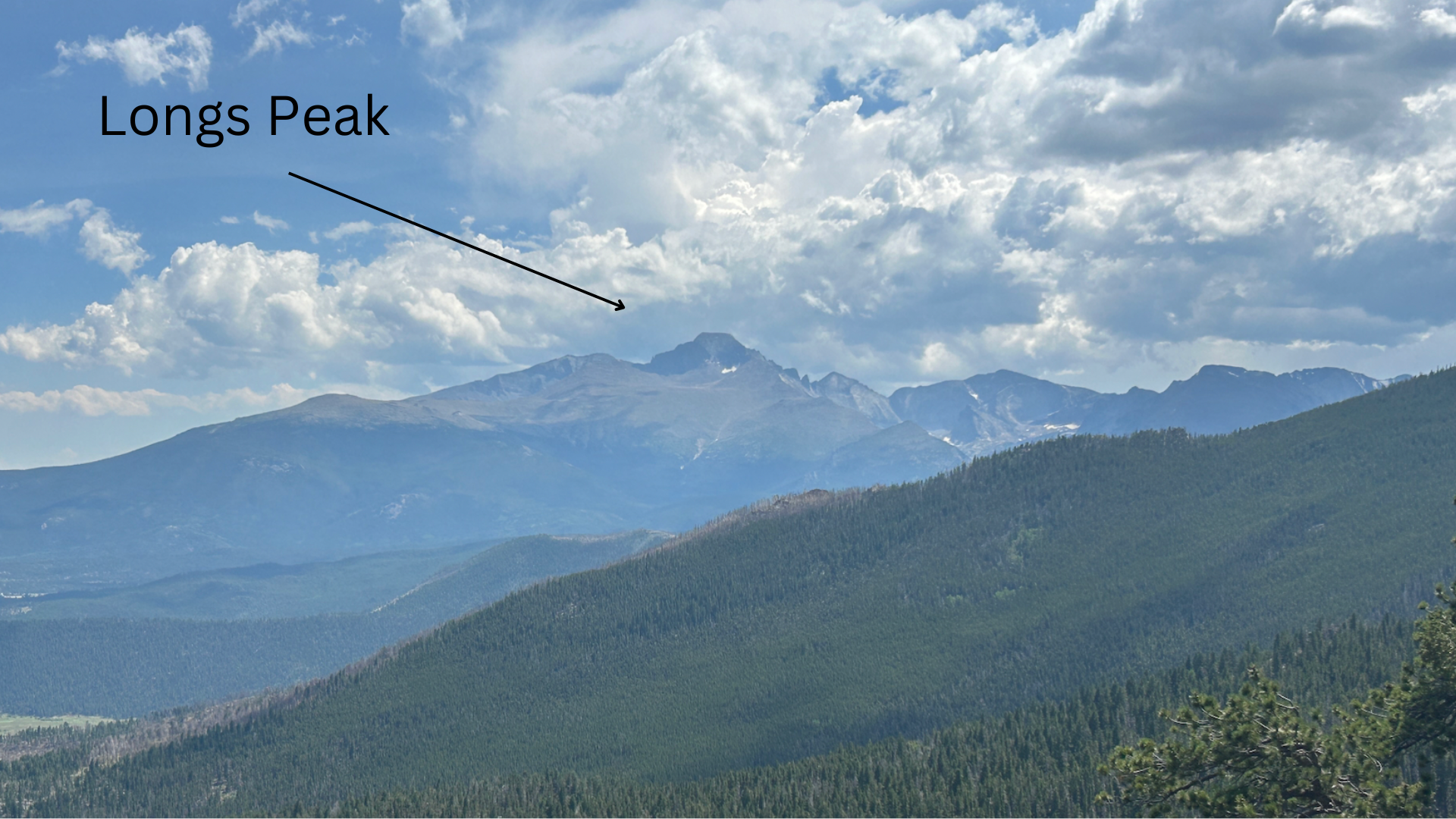
I stopped several times to take in the views of the mountain lakes and the snowy peaks across the valley, then kept going. I ate and drank, and stopped to breathe.

I made it above treeline and kept going to Flattop. The views were stunning. My head started to ache. I sat down for a few minutes. I made it to a snow field and then to the junction where Hallett’s trail continues marked by cairns only. I asked a man in running tights how the trail was. “It’s an easy 20 minutes.”

I was convinced to continue and it was slow going over rocks, much like Mount Washington and the Presidential Traverse in New Hampshire. The last tenth of a mile was scrambling and looking for cairns. This was not easy. Every step I was cautious and intentional. My brain was zombie-like. I had a headache.
I made it.
This is seriously the biggest accomplishment for me in 2025. I did what I planned to do. I didn’t injure myself. I didn’t have a heart attack. I didn’t get killed by a wild animal. I made it.
I don’t stay long and head back down. I’m nervous about running out of water. I have my filter and just need to find a stream.
At the junction I met three women, all solo hikers. We took a selfie and this was the moment when I knew I’m not a weirdo to do all these hikes solo – so many other brave women were doing it too. In the background is Hallett Peak.

I hiked slowly and methodically because I wanted to remember this moment. I did it.

I found a stream and filtered water into my bladder and kept going. The sun was strong and I was eager to get into the trees. I made it down and I’m surprised that nothing hurts; my training was good.
I got back to my car and drove back to Estes Park. I needed food and more water. I don’t have a post-hike plan other than to drive to Leadville after. I should’ve had a plan.
I left the park and head edback to the hotel where I knew I can use a restroom to clean up and possibility get another burger. The burger place was closed so I drove down the road to a Mexican restaurant and ordered a burrito and Pepsi. Just what I needed.
I looked through my photos of the day while I ate my burrito and I felt so happy. So happy.
Now on to the next hike – Hope Pass at Twin Lakes on Saturday – and a chance at redemption.