Go see the world

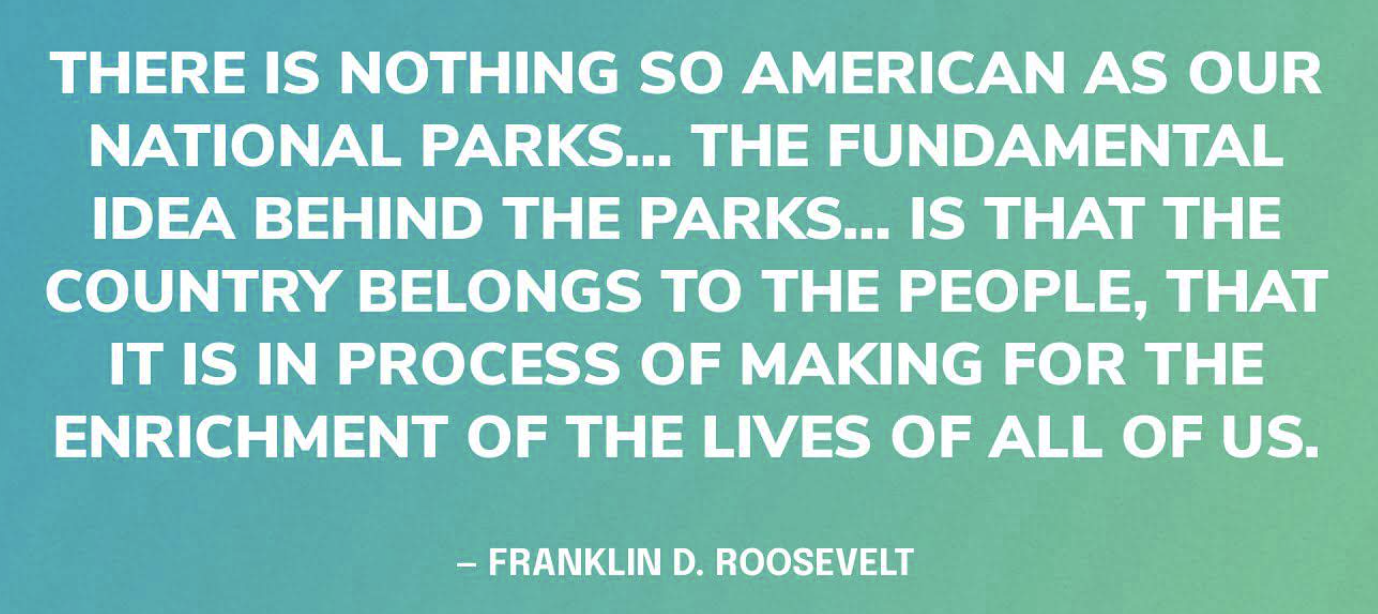
“National parks are the best idea we ever had. Absolutely American, absolutely democratic, they reflect us at our best rather than our worst.”  —Wallace Stegner, 1983

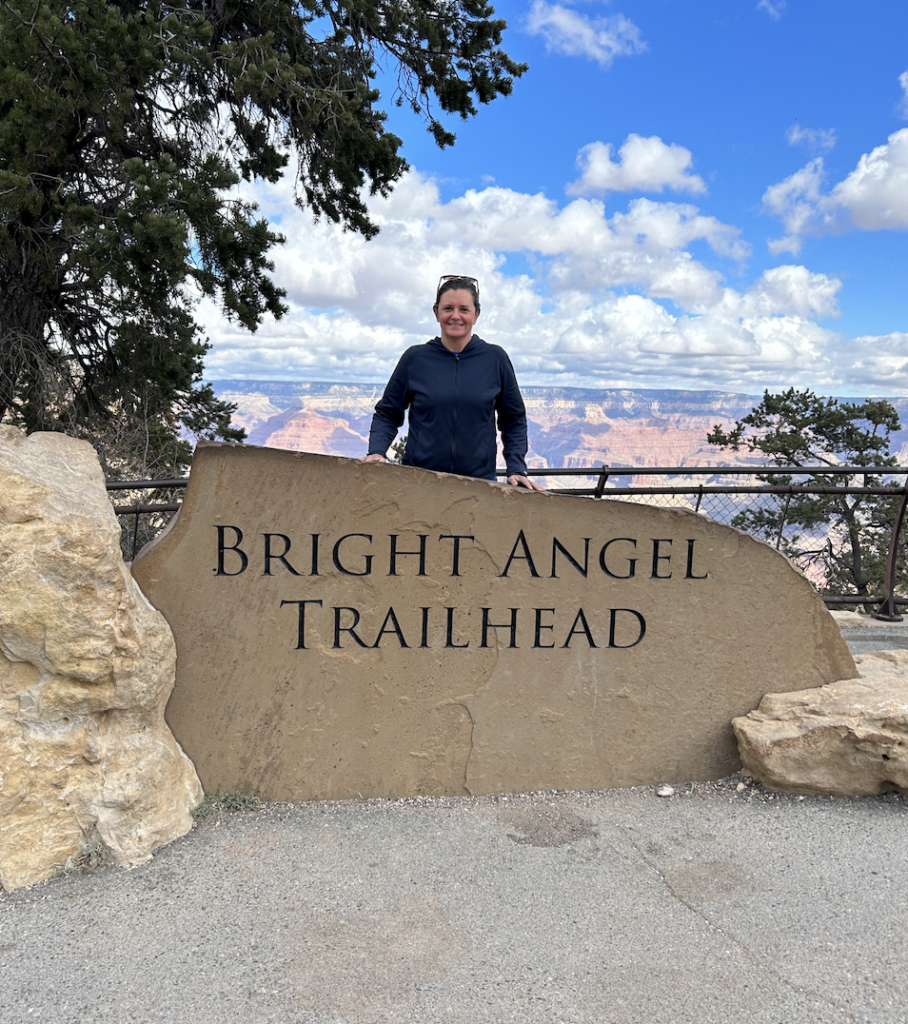
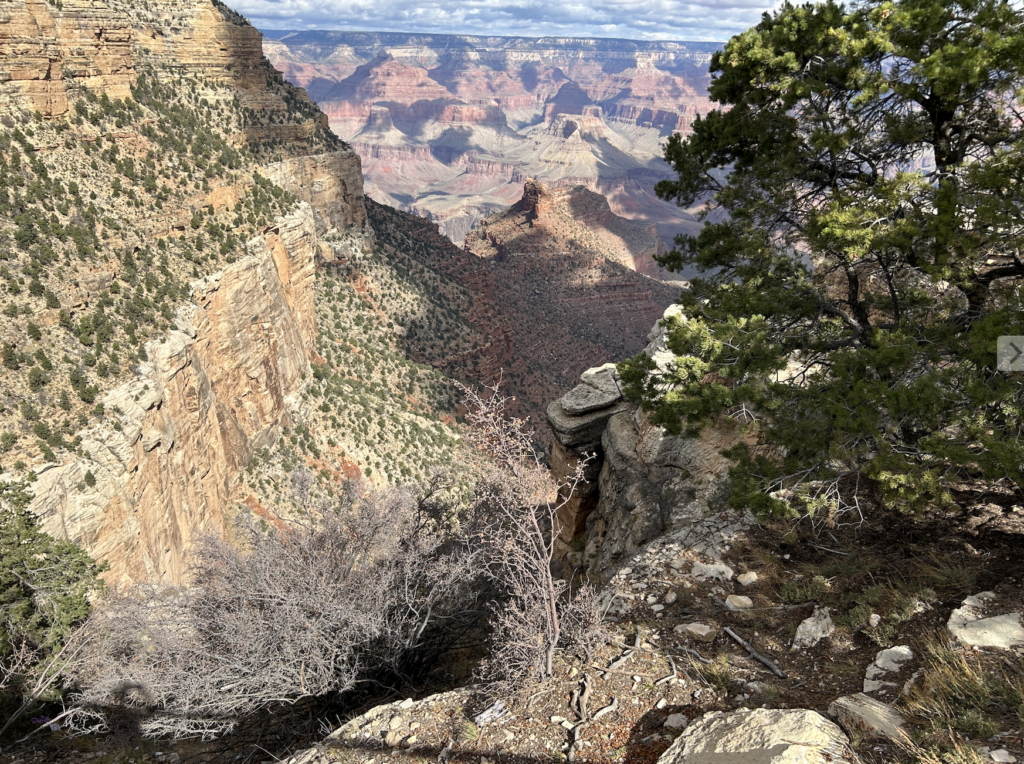
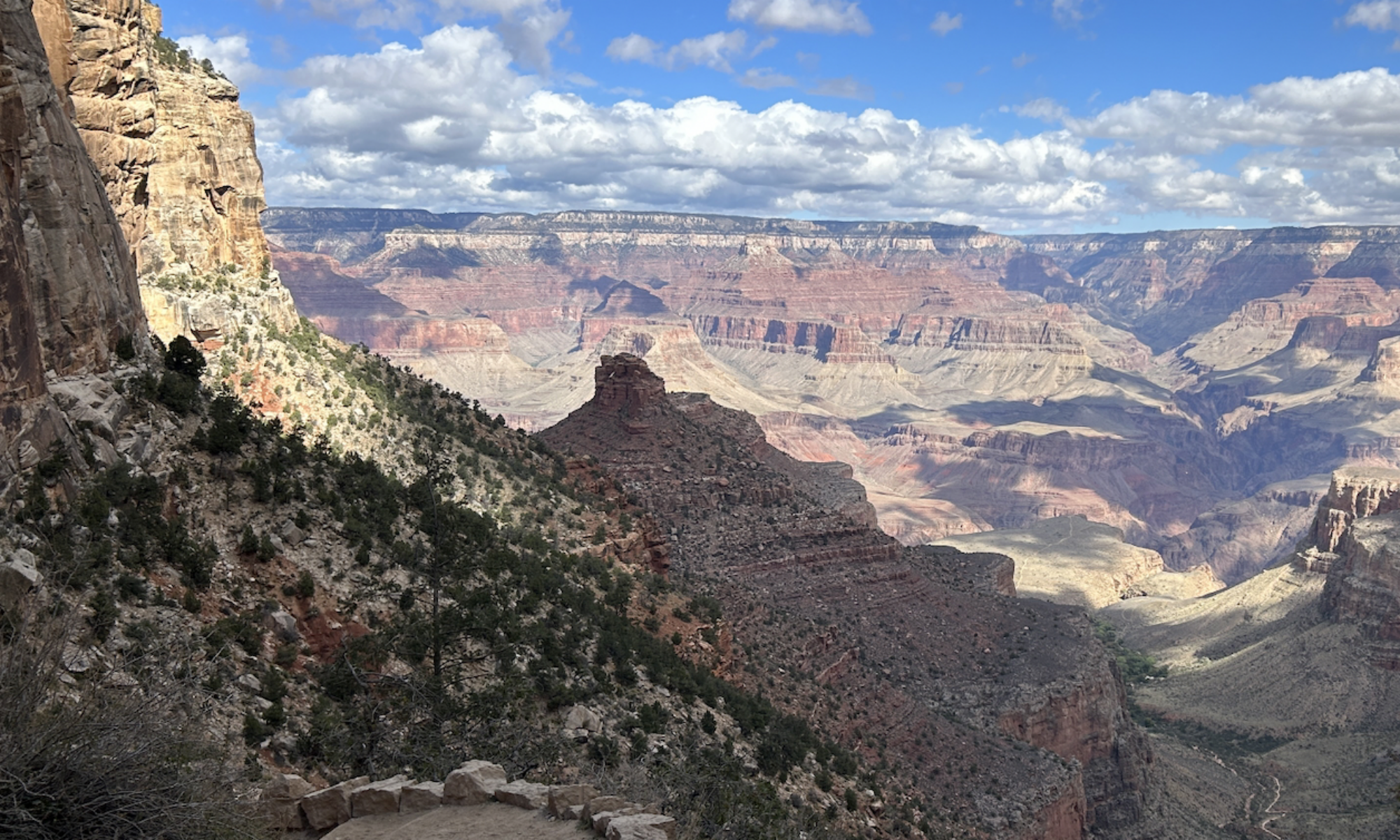
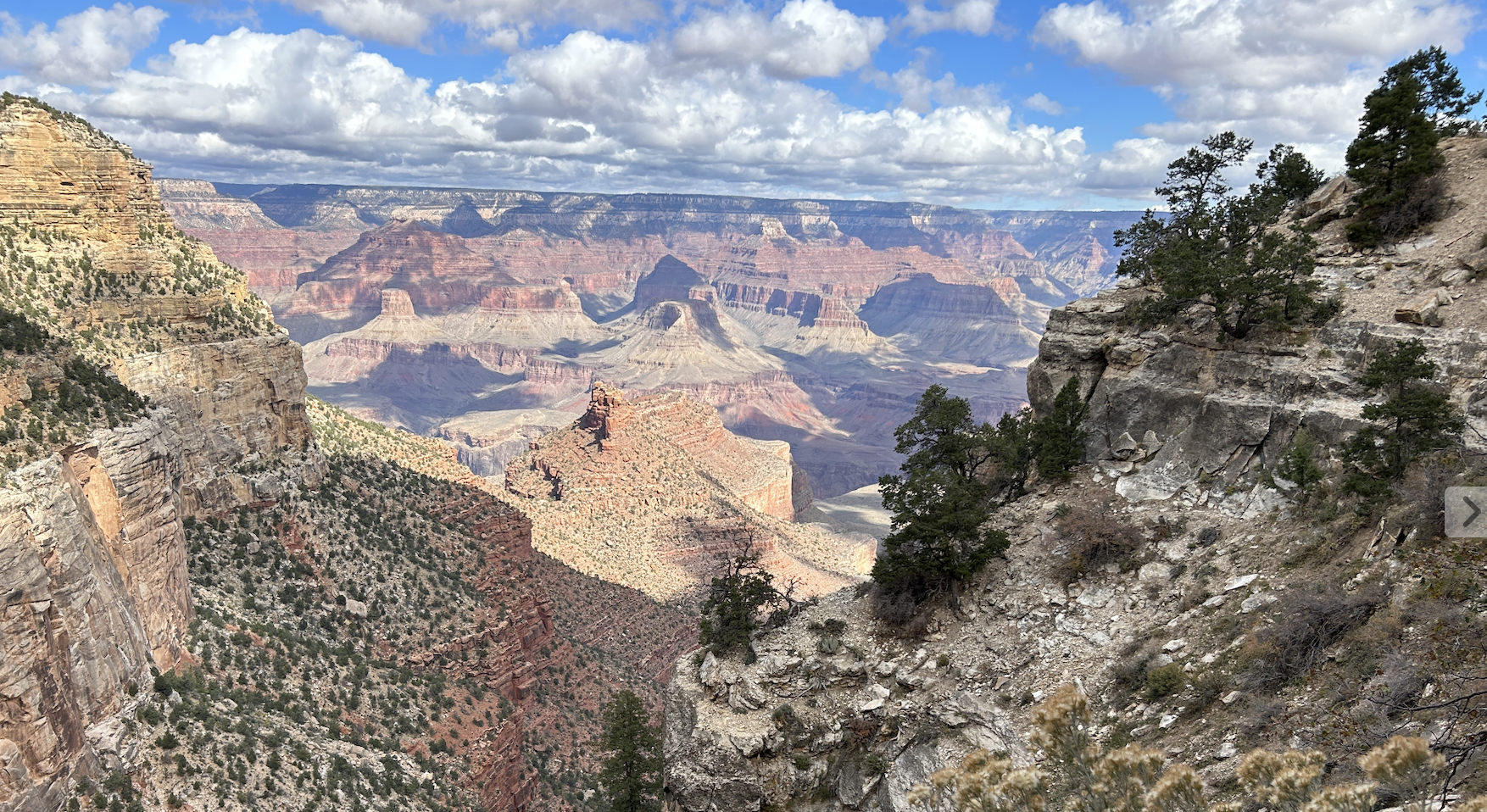
I’ve just finished re-watching America’s Best Idea, the PBS special from 2009. In 1988 I wanted to go see the western National Park and signed up for a trip. Now, I just want to go see all the National Parks; I just want to go see the world. As much as I can. Ken Burns inspired travel.

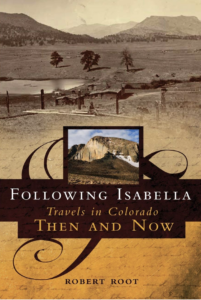
Following Isabella and My Colorado Adventure, Book Review

Robert Root writes the story of how he followed Isabella Bird’s three-month (Sep-Dec) journey at age 42 through the Front Range of Colorado in 1873. While Bird seeks to understand this place, Root seeks to see what Colorado will mean to him after living most of his life in Michigan. 

He writes about that first view of the Rocky Mountains while driving from the plains; it is impossible to forget. It is a spellbinding moment of beauty and awe – that first glimpse of snow white peaks in the distance. He enters Colorado from the east similar to all migratory Americans, and me too. (17)

I know that view he describes from driving west from Maine in 2004. Like early adventures and explorers Root is lured west by the promise of new beginnings. 

As an outsider, Bird entered each new world with an openness to experience and an intention to record what she encountered. (19) I think this is a similar sentiment for me. I feel like every new trail or new state I move to there is an intention to record it and understand it. 

Bird was labeled high strung along with being an adventurer. In 1873 there were few women adventurers exploring the frontier.  Root writes her health improved while traveling. When home, she “wilted”. Her life was traveling and exploring but she preferred the less traveled parts of the world. She was always looking for the path less traveled, less populated areas. Also, novelty and freedom kept her healthy, Root writes. And this 1873 Colorado  challenged her resourcefulness and curiosity. A place unfettered by duties to her family and society is the world she created for herself. The plains and the makeshift settlements unsettled her but once she reached the canyons and mountains she remarked: 

“the canyon became utterly inaccessible…this was exciting; here was an inner world.” (47)

When she entered Estes Park, she came alive.

 “Mountain fever seized me”, she writes in her journal.

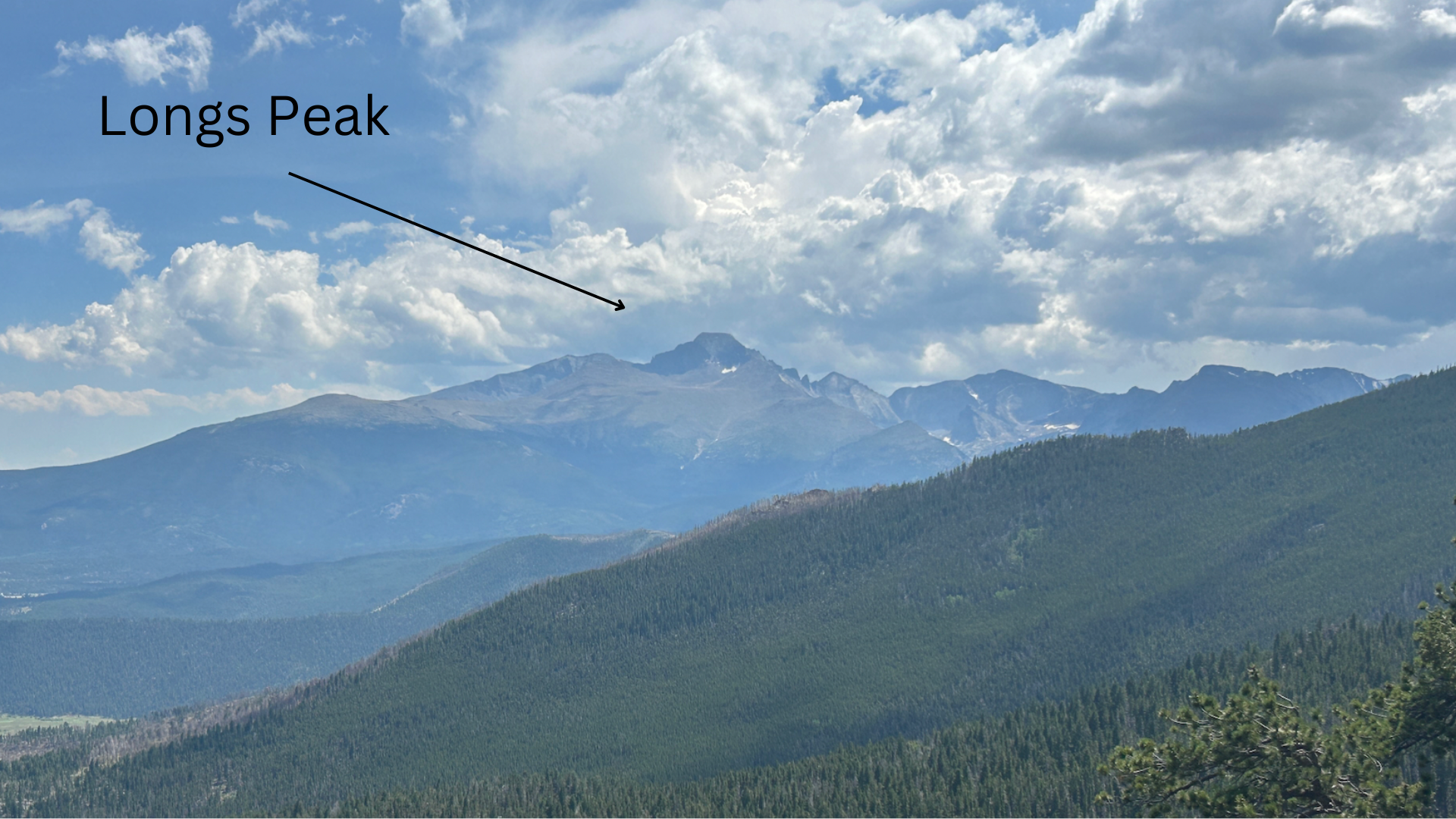
Root writes that she didn’t have much interest in the science of the place; she was interested in the mood it created in her or the circumstances it created for her. (63) I am captivated by her journal writing about the hike to Longs Peak. I just so happen to be reading this section of the book on the plane as I fly from Knoxville to Denver knowing I will see the peak in the distance. I never thought of climbing Longs, even after 10 years of living in Colorado but for some reason, I want to now. Maybe it is the emotion she writes about the trail to the top. I want to experience it the way she does. 

Root writes that Bird worried about writing about beautiful places because you don’t want the masses to find it. Similar to other nature writers, particularly Edward Abbey, she wanted to keep it to herself and unspoiled. 

Root reflects on Bird’s writing and his, and defines memoir and compares it to autobiography “Autobiography is a chronological art, an act of recordkeeping with commentary, not, like memoir, an attempt to revivify a period of the past, make it possible for another person to live the moment too through reading. Autobiography eschews the intimate, the commonplace detail,  the unexceptional private life; memoir embraces them.” (113)

Are you a sticker or a transient? Root answers: “If you stay too long in one place you can no longer  call yourself a transient or a traveler. You’ve become an inhabitant and you spend your time learning how to dwell there, day by day. For most of us, perhaps, this inevitable change is not only expected but anticipated. For Isabella Bird, it was frustrating and unacceptable.” (271)

I’m not a sticker but I’m not transient either – I think, maybe.

Bird came to Colorado on a recommendation of a friend, writes Root. She found more than she expected and didn’t expect to stay longer than she did. She traveled to remote places, places on the edge of the frontier, and avoided settled places. She preferred the wild and less cultivated areas. She went on to other places and wrote books about the other places and never mentioned Colorado again; and she never came back. She wanted to be in motion and test her limits. She retreated from a regulated life of responsibility and obligation and social constraints. 

Root is a nonfiction writer of place who wrote this book after moving to Colorado. He falls in love with the place as he follows Isabella’s travels in the Front Range. 

Like Root, I love to explore new places and find its “distinctive qualities” and learn its natural and cultural histories. “I’ve merely wanted to know where I am…I like who I am when I’m here,” he writes. I can say the same thing about the mountains towns I’ve lived in. I consider my current place, Sevierville a mountain town. 

Root ends his book with a pithy statement about Colorado that rings true to me and my discovery, while living in different places: “I can imagine moving on. I can’t imagine letting go.”

“The mountains are hard to ignore, hard to be complacent about, and yet the sight of them so often startles me, stuns me, as if I’m repeatedly discovering them anew.” (265)

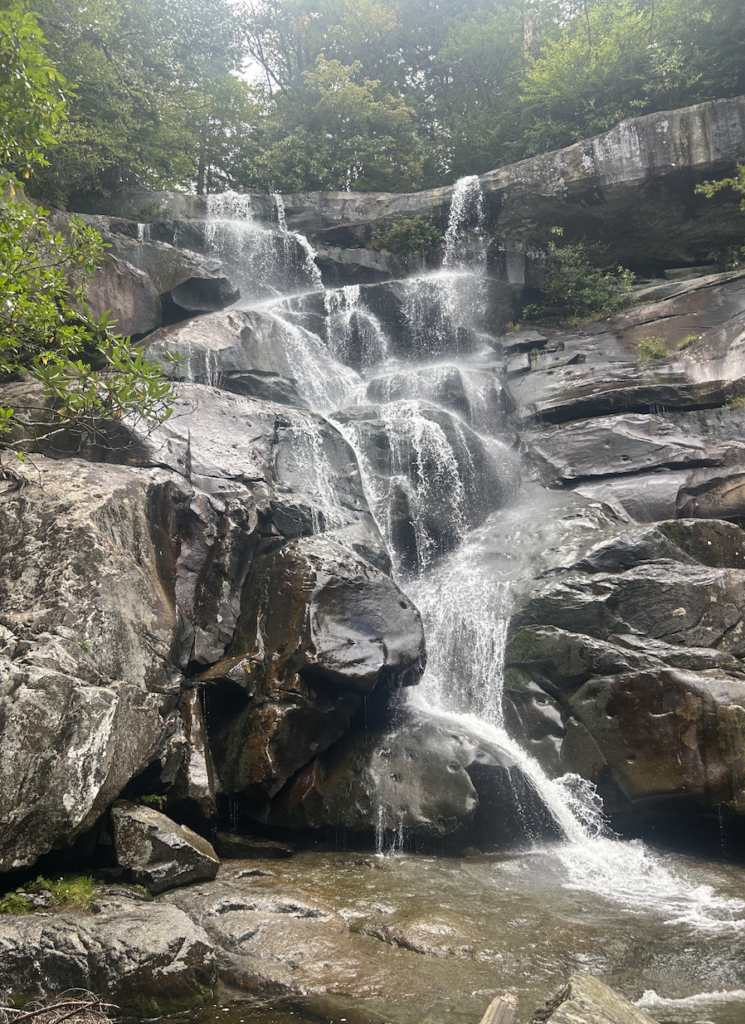
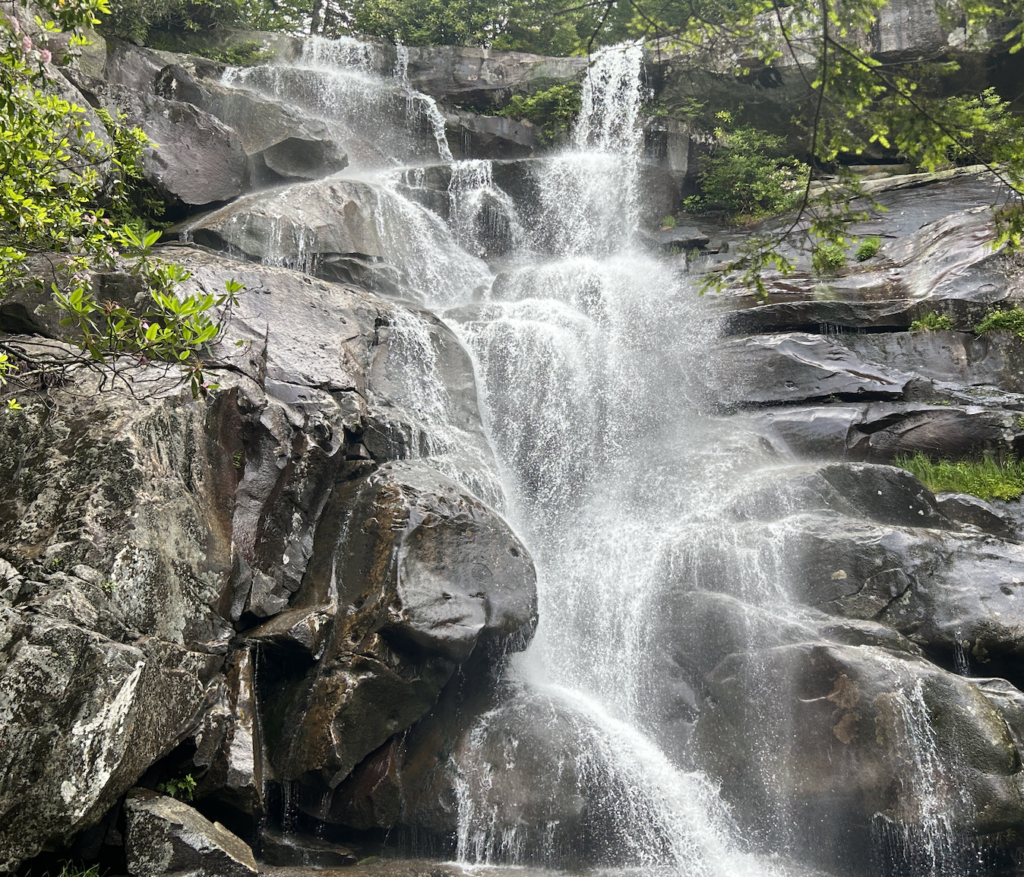
Ramsey Cascade in September

Last weekend I decided to run/hike to Ramsey Cascade in Great Smoky Mountains National Park. I needed more than 8 miles for my training plan so I parked at the bridge that crosses Middle Prong at the intersection of Greenbrier Road. The total miles for the day: 11.2 miles and 2,680 feet of elevation gain. 

Parking remotely turned out to be the best idea because trailhead parking for Ramsey Cascade fills up quickly, and when I ran through the parking area on the way back there were many strange parking jobs where multiple cars looked stuck. And so many people by noon. 

I started early as always and only passed four hikers going up on this Sunday in September.

Trail maintenance has been ongoing during the week. Rock steps and ladders are this hiker’s dream. The closer to the end of the trail, the more ladders are present.  This construction does close this trail right now Monday through Thursday. 

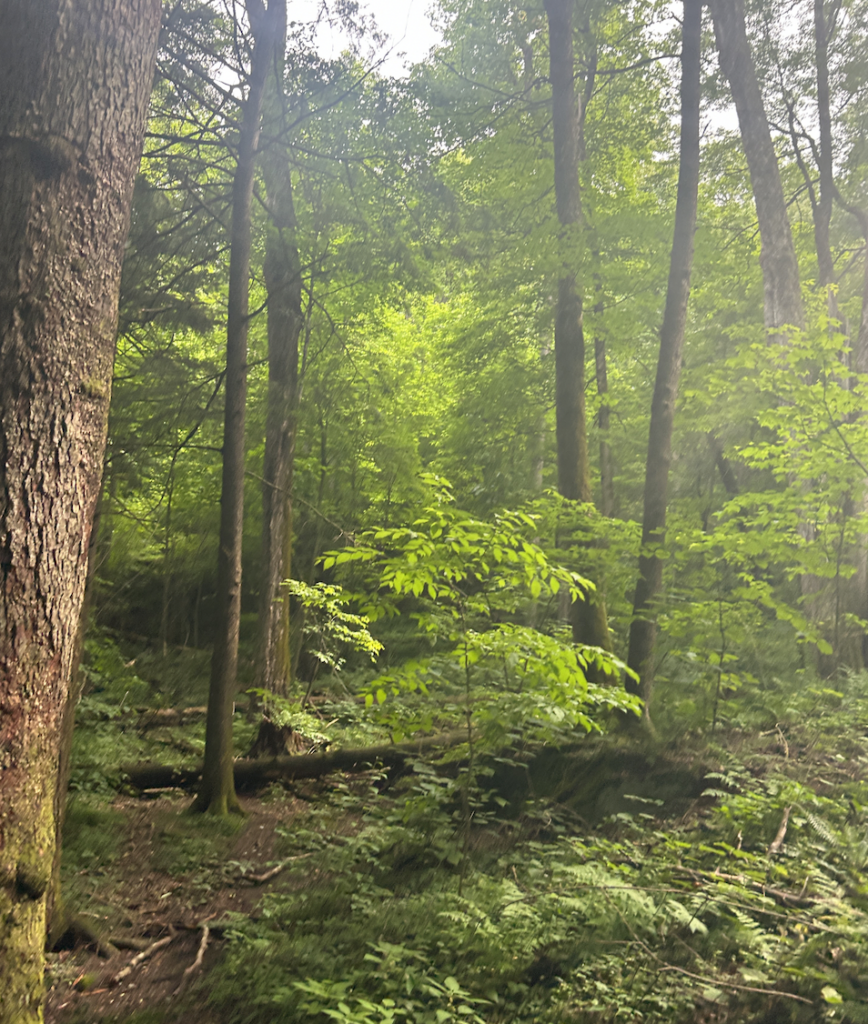
The Ramsey Cascade trail is about 60% runnable. There are rocky parts and steep parts, and various flats and straight up parts; it’s a trail runner’s dream. When I cross streams or get close enough to the rushing water, I am able to throw water over my head and splash my face with the cool water to stay cool.

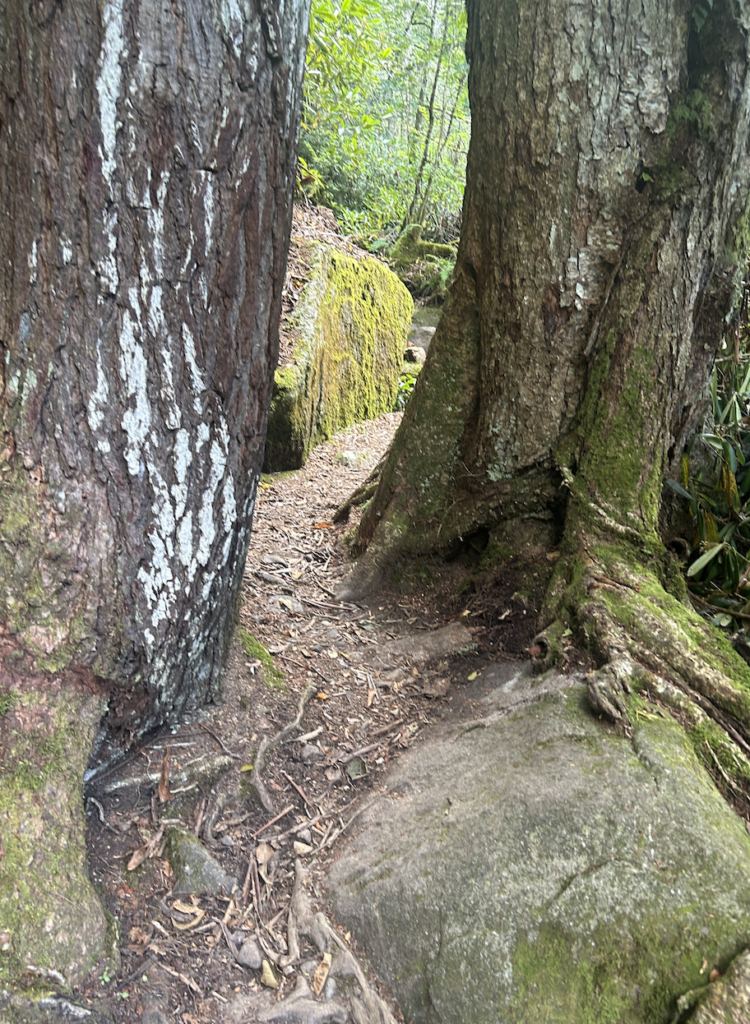
My favorite part of this trail is looking for the huge Tulip Poplar tree. I’ve seen so many old time photos of people holding hands around this tree for perspective. One day I will do the same if I hike it with a group of people. 

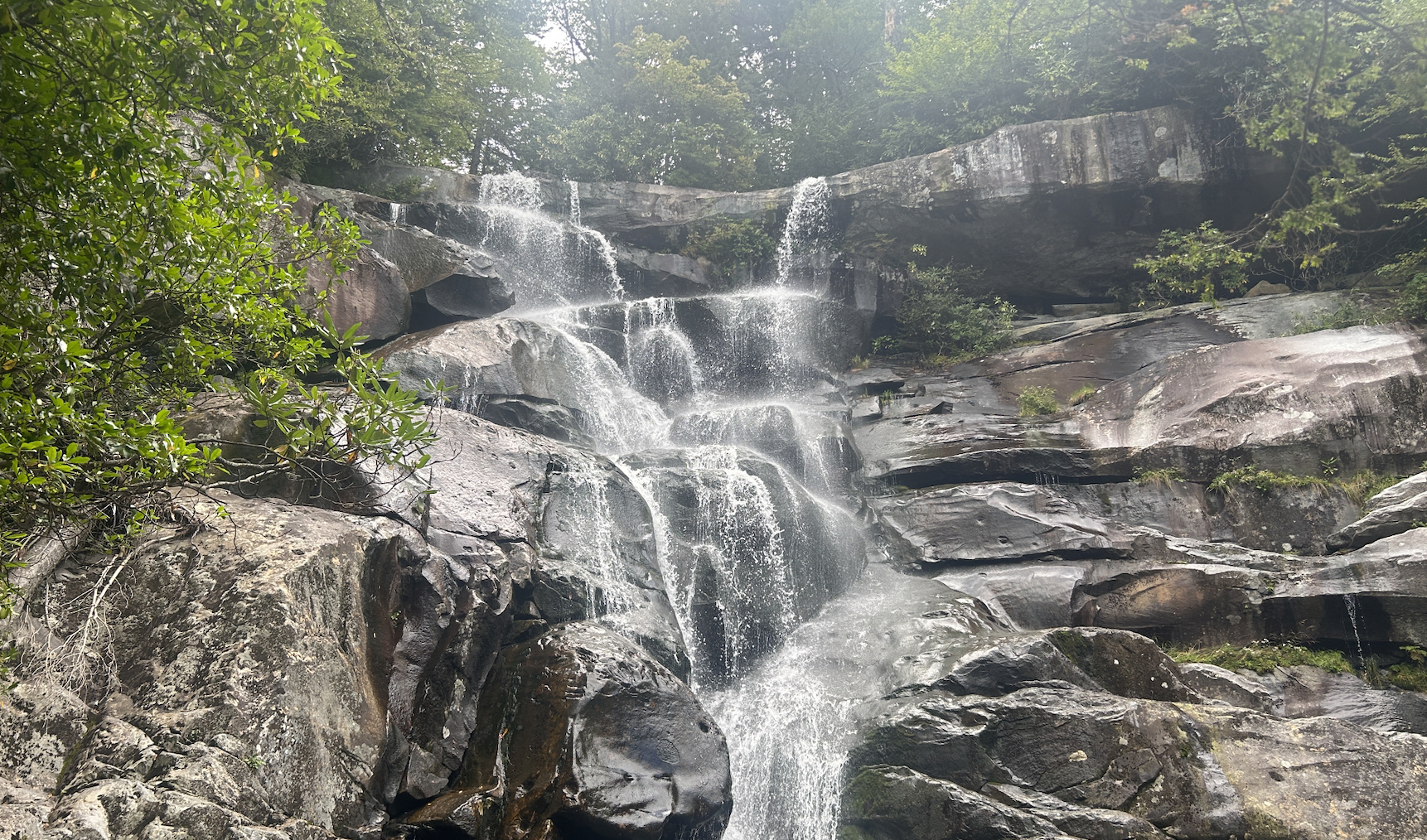
The closer I get to the waterfall the louder the water becomes and it’s thrilling to see the white cascades through the trees on approach. The waterfall is spectacular as always and I could stare at it for hours. This was my second time on this trail and first time trying to run it as much as I could. 

As I headed down I talked to another solo hiker and she told the story of how she comes to Gatlinburg every year and likes to hike this trail. Before all the new trail construction the boulders were so big that an older man got stuck and search and rescue had to get him. I told her how thankful I was for the trail maintenance done on this trail. It such a popular, it really is needed. I passed about 30 people going up. 

The leaves aren’t changing yet but I can’t wait to get back there for another run and see the fall colors. 

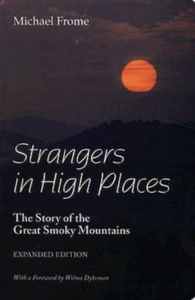
This week I finished reading Strangers in High Places; The Story of the Great Smoky Mountains by Michael Frome. The book is so good, so compelling, so well written, that I read it in a week. I like how Frome starts with the Eastern Cherokee history, and sad removal, and then moves to the mountain people and lumbermen. He writes about the moonshiners and revenuers (IRS), bears and all about the park’s boars/pigs.

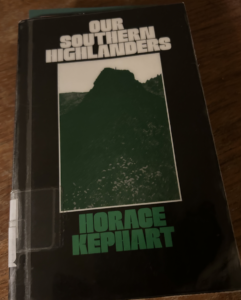
The longest section is about the legislation surrounding the Smokies becoming a protected national park. He writes about land transactions surrounding the creation of the park and all of the ongoing personal interests that are threats to it. He wrote about Horace Kephart, and how Kephart left his family and moved to the North Carolina woods to start over. He later became a folk hero to many mountain people. I had to learn more about him so I’m now reading Our Southern HighlandersThe full text is here courtesy of The Project Gutenberg.

I would argue that these two books should be required reading for anyone who loves the Great Smokies and wants to understand its history. 

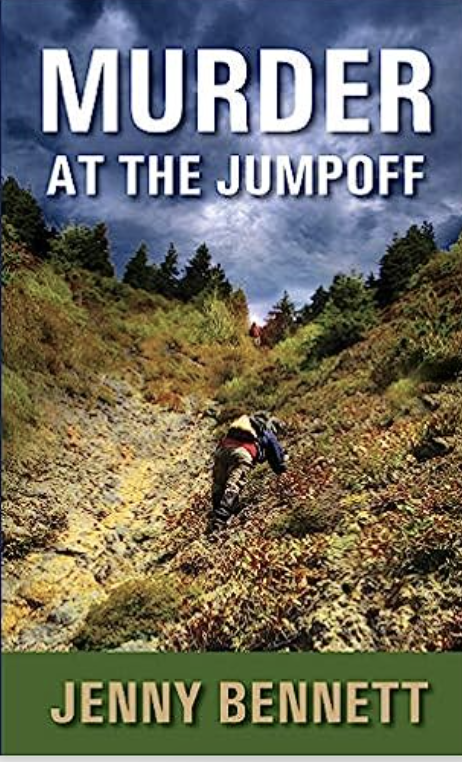
Review of Murder at the Jumpoff

I like how the story includes chapters that take place in New Hampshire’s White Mountains. I also like how I found this book after hiking many of the trails in Greenbrier in GSMNP. I’ve  been on a lot of the trails in the book except for the manways. As I read the book I just kept thinking what a funny name to call the bushwhacking trails since I’ve always known them as organic trails; trails that the Forest Service despises in NH. I think it might be a Smokies thing.

I’m not a big murder mystery reader but the landscape of this  book held me close. I couldn’t put down the book. I really enjoyed how each chapter switched back and forth from each character’s perspective. I liked the characters especially Hatsy, Sally and Hector. 

Before and after reading the book I kept Googling the author, wanting to find out more about her. I wondered which character she was like; probably Hatsy. But I wondered why the author committed suicide? She had such an interesting life and lived in many different places, and was such a talented writer.  The mountains called her, and she moved around a lot. She travelled and lived in beautiful places like Colorado, New Hampshire and Vermont – all places I’ve lived and loved, primarily for their mountain landscapes. 

This book found me after I’d stopped hiking in the park for a bit, getting distracted by other life things.  I was frustrated that I couldn’t hike with dogs on trails, plus it was getting hot and humid. However, the last few weeks, every weekend I went to Greenbrier on a different trail. It was easy to get to – I didn’t have to drive through Gatlinburg on a weekend. And I was always on a time limit since I didn’t want my new pup to be in his crate for more than 5 hours. When I started reading the book, I wanted to hike more and get to know this park. 

I don’t have a desire, even after finishing the book to hike off trail – I like hiking and trail running on trails; this book was just a new perspective on the park. The characters in her book loved the challenges of the mountains and exploring the landscapes I love, too. 

In an interview the author said, “To me, off-trail hiking is a magical journey, a quest to discover incredible places that practically no one ever sees.”

I like reading books that take place somewhere I know. Scenes in this book took place in the Great Smoky Mountains National Park, Sevierville and Knoxville. It allowed me to enjoy the book more that the story took place here. Plus, the final chapter takes places in the White Mountains and the scene is a mountain I know. 

Excellent book. Here is a link to a story about her and her death:

Jenny’s obituary

Summer in the Smokies

Now that I’ve lived in Tennessee for just about a year, I’m finally settling in and it’s feeling more and more like home. 

I started biking again and my running is lagging behind. It’s been a strange few months. 

Typical for me, as I approach trail running season my motivation to run lessens. I just can’t get in the groove to train for a 100. Maybe 100 is just not in the cards for me.

However, biking is going well. I am nervous biking on these roads since they have no shoulder and they are very windy. The roads here are well maintained but sketchy to bike on. It’s kind of my thing to discover new places running and biking; and that is what I’ve been doing the last few weeks. 

I’ve always hated driving somewhere to run or bike. I just want to run and bike from my house. This week I looked at the map and discovered a loop. And this loop has some hills. 

The loop is really beautiful and scenic. I pass farms and green trees and homes. Two loops and just over 1,000 feet of climbing. 

Now I just need to get brave and bike on the Old Newport Highway which has a big shoulder but a lot of debris. 

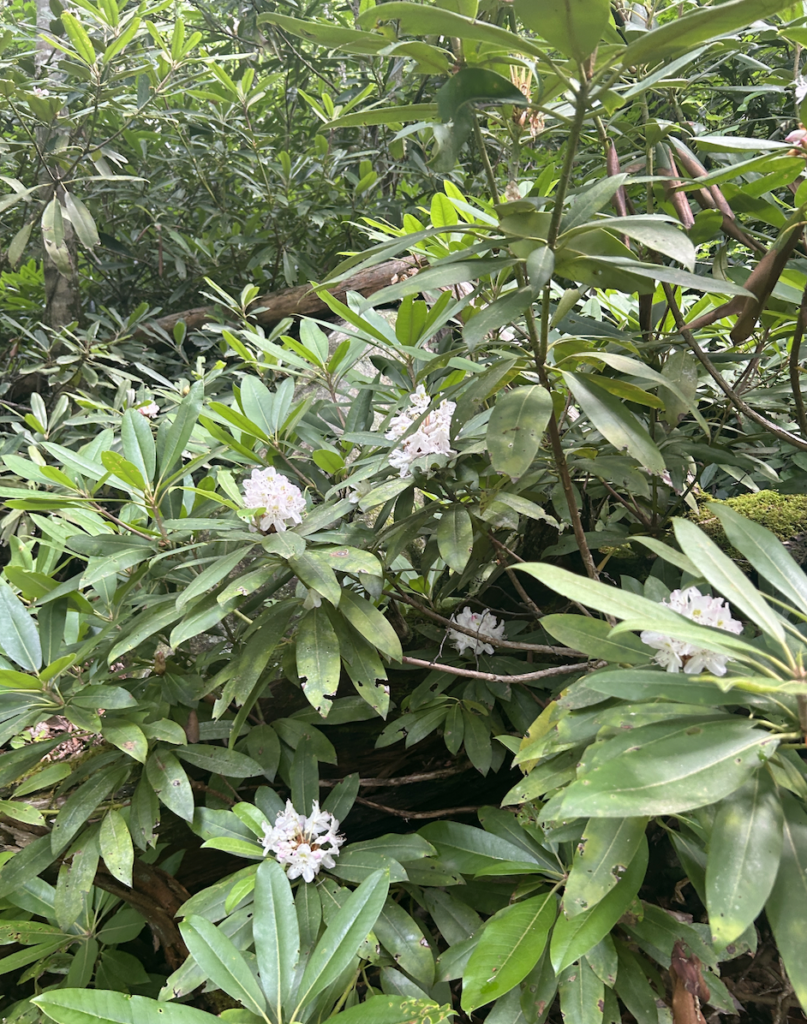
I am loving the beautiful flowers popping up at my house. I moved into the house in February so it was a  bit drab. And as annoyed as I am with all the problems with the house to fix, I’m pleasantly surprised at the perennials the prior owner planted. Now I just need to buy a lawn mower.

All three dogs are good and having fun. There is river access about five miles from the house so we are swimming regularly. I just love these guys:

Now I’m off to go hike in the park. Happy Summer!